

How Should Broadcast Brands Brief a Dubai Event Agency?

A media technology showcase should let a buyer test a workflow, not simply watch a product reel. For broadcast and production brands planning a Dubai exhibition, the brief should specify the buyer decision, the live demonstration, the evidence owner and the next meeting. CABSAT 2026 offers a useful setting for that question because it brought media, broadcast and satellite communities together at Dubai Exhibition Centre. This guide sets out a practical briefing method for the next activation.
• CABSAT 2026 ran at Dubai Exhibition Centre from 5 to 7 October, according to the official CABSAT event information.
• Dubai World Trade Centre's opening announcement identifies CABSAT and SATExpo as concurrent events serving different technology communities.
• The CABSAT programme included content discussions and demonstrations, making a specific buyer task more useful than a general brand statement.
• At CABSAT 2026, a broadcast exhibit needs one accountable owner for each claim, whether a feed, a playback comparison or an integration path.
• For Dubai Exhibition Centre buyers, SNXS can turn a technical demonstration into an event journey with a qualification step and a documented follow up.
In This Article
1. Broadcast Exhibition Briefs Start With a Buyer Decision
2. Dubai Exhibition Centre Planning Needs Venue Verification
3. Dubai Media Technology Demonstrations Need Operational Proof
4. What This Means for Your Brand
Broadcast Exhibition Briefs Start With a Buyer Decision
Broadcast technology exhibitions expose a common gap between spectacle and proof. A large screen may attract a visitor, but it does not establish whether the underlying workflow solves the visitor's production problem. A buyer needs to know which source was used, where processing occurred, what changed during the demonstration and what remains simulated.
The agency's job is not to certify the engineering. It is to make the route from the first question to the responsible technical person intelligible.
An institution commissioning a studio may ask about accessibility, operator training and maintenance. One generic demonstration cannot satisfy each buyer, but a carefully designed interaction can identify the right pathway without asking visitors to sit through a long pitch.
The official CABSAT site describes the exhibition as a meeting place for media, broadcast, satellite and professional audiovisual communities. Its programme and visitor information provide the context for planning, not proof that any particular booth generated leads. The opening account from Dubai World Trade Centre, carried as a DWTC press release, describes the parallel SATExpo programme at Dubai Exhibition Centre.
Those are event facts. The operating framework below is SNXS's recommendation for a future brief, not a claim about what any exhibitor achieved at CABSAT.
Choose the decision before choosing the display. A production director deciding whether to schedule a technical evaluation should leave with a documented use case and named contact. An engineer deciding whether to explore integration should leave with an architecture discussion.
A procurement team deciding whether to issue a request for proposal should leave with scope boundaries, dependencies and the person authorised to answer commercial questions. Each path deserves a different invitation to continue.
The starting document should describe the audience in the visitor's language. Write a short buyer question for each role and attach a demonstrable response. For example, a visitor might ask whether a system can fit an existing production chain.
The answer should identify which parts are visible on site, which are explained with an architecture diagram, and which need a subsequent technical review. The event team can then design signage, host prompts and meeting areas around real decisions instead of product categories alone.
A live demonstration must have a beginning and an end. Begin with the input and the stated constraint, let the buyer see the relevant process, and finish with the output and its limitations. If any component is prerecorded or simulated, say so at the moment the viewer sees it.
This is not a concession. It builds confidence by separating the claim under test from the production environment that the venue cannot reproduce.
The technical owner should approve the script before a camera, stage or host is booked. Ask which claims can be repeated publicly, which interfaces may appear on screen, whether customer material needs permission and what contingency applies if connectivity fails. A producer can write concise host copy only after the engineers have agreed on the boundary between a live result and illustrative material. This avoids asking an enthusiastic presenter to improvise a performance or capability claim.
Keep confidential material away from an open aisle. A separate conversation area helps staff distinguish a technically relevant inquiry from a casual product tour.
Dubai Exhibition Centre Planning Needs Venue Verification
In Dubai, show logistics create a second layer of decisions. Dubai Exhibition Centre is a venue that should be evaluated for access, installation rules and technical services directly with its operator. The event's published venue information confirms where CABSAT took place; it does not establish that a future activation will inherit the same hall, floor plan or permissions.
Build a site visit into the brief. Verify loading, power, networking, sound separation, accessible circulation and any restrictions on recording or suspended equipment for the actual booking.
If a demonstration depends on remote systems, specify a local fallback. The fallback should preserve the buyer's ability to understand the workflow without pretending that a disconnected test was live. A printed system map and a recorded walk through can explain the sequence, while the host states exactly what cannot be verified on site. Rehearse the switch before doors open and give the demonstrator authority to pause a claim that cannot be shown accurately.
Dubai Media Technology Demonstrations Need Operational Proof
Cross border audiences need an equally clear route to substance. A regional visitor may not use the same procurement language as a local buyer. Translate the use case into business and technical terms, and have a specialist available for detailed questions.
If a product is not available in every market, say which markets the team is ready to discuss. A lead form without context turns an international event into an indiscriminate contact list.
Use a decision checklist at the point where the concept becomes a production brief. The criteria below are intended to be checked by the brand, the technical team and the agency together before any supplier is instructed to build.
1. Buyer decision. State the exact action a qualified visitor should be able to take after the demonstration and the evidence needed for it.
2. Technical claim. Obtain a signed explanation of what is live, what is simulated, which metrics are relevant and who can approve changes.
3. Visitor path. Map the route from entrance to discovery question, demonstration, specialist conversation and agreed follow up.
4. Production dependencies. Confirm power, network, audio, display, content approvals, accessibility and operational backup at the booked venue.
5. Handoff record. Define the fields that capture permission, use case, decision role, next step and the person responsible for responding.
6. Rehearsal boundary. Test the actual content and failure modes with the technical owner present, not only the visual sequence.
These checks give the team a common language for approving an activation. They also reveal whether the concept is too broad. If an exhibition team cannot name the buyer decision or the technical owner, it should simplify the showpiece before increasing production complexity. A highly polished booth cannot compensate for an unanswered capability question.
What This Means for Your Brand
SNXS works across event management and marketing for corporate and technology teams. Its services page explains the broader agency scope, while its portfolio gives buyers a place to review work before asking for a proposal. MENA Blockchain Week, an SNXS initiative, is a separate example of event programme experience, not evidence that SNXS organised CABSAT. A buyer should still assess the proposed team, relevant technical partners and the actual scope for the new brief.
What should a brand measure after the show? Start with qualified conversations tied to a stated use case, not raw badge scans. Record whether the next step was a technical review, a commercial scoping call, a request for documentation or no fit.
Confirm that promised material went to the right person and that a named colleague owns each response. The quality of the handoff can be checked without claiming a sale occurred because someone visited a booth.
For an upcoming media technology activation in Dubai, the practical request is straightforward. Ask an event agency to show the buyer journey, the technical claim register, the venue dependency list and the handoff plan before approving a visual treatment. A design can then serve the demonstration rather than conceal uncertainty. If your team needs that operating brief, contact SNXS through its services and consultation pages with the product, audience, venue and desired decision.
FAQ
Q: How should a broadcast company brief an event agency in Dubai?
A: Describe the buyer decisions, technical claims and venue dependencies before commissioning a booth design. Assign a technical owner to approve every demonstration and identify the next step for each qualified visitor.
Q: Should a broadcast booth show a live workflow or a video?
A: Use a live workflow when the conditions allow a truthful test. A video can explain a process, but the host should label it as recorded and say what remains to be verified in a technical session.
Q: What information belongs in a technical exhibition lead record?
A: Record the visitor's permission to follow up, role, use case, question and agreed next action. Give the response to a named owner rather than treating a badge scan as a qualified opportunity.
Q: How can an agency plan an accessible product demonstration?
A: Test sight lines, sound, circulation and the visitor's ability to ask questions at the actual venue. Provide another route to the same evidence when a crowded presentation format excludes someone.
Q: What should a brand ask a Dubai Exhibition Centre supplier before booking?
A: Confirm the actual hall plan and venue requirements for loading, power, networking, rigging and recording. Do not assume the rules or layout of a past event apply to a new booking.
Q: How do you compare proposals for a media technology activation?
A: Ask each agency to specify the buyer journey, technical approvals, staffing and handoff deliverables. Compare the boundaries of the proposed work rather than only the renderings or quoted footprint.
Need help turning industry trends into business growth?
Get in touch!
At SNXS, we help startups, enterprises, and government organizations navigate AI, blockchain, Web3, fintech, and digital transformation through strategic consulting, event management, marketing, PR, content, and community building.
Whether you're launching a product, expanding into the MENA region, building your brand, or growing your community, our team is ready to help.
👉 Our Services: https://www.snxs.ae/services
👉 Portfolio: https://www.snxs.ae/portfolio
👉 Store & Digital Products: https://www.snxs.ae/category/all-products
👉 What's Coming Next – MENA AI Week: https://www.menaaiweek.ae/
👉 Business Registration Services: https://www.snxs.ae/business-registration
👉 Request a Quote: https://www.snxs.ae/get-a-quote
👉 Book a Free Consultation: https://www.snxs.ae/book-online
🌐 Visit SNXS: https://www.snxs.ae
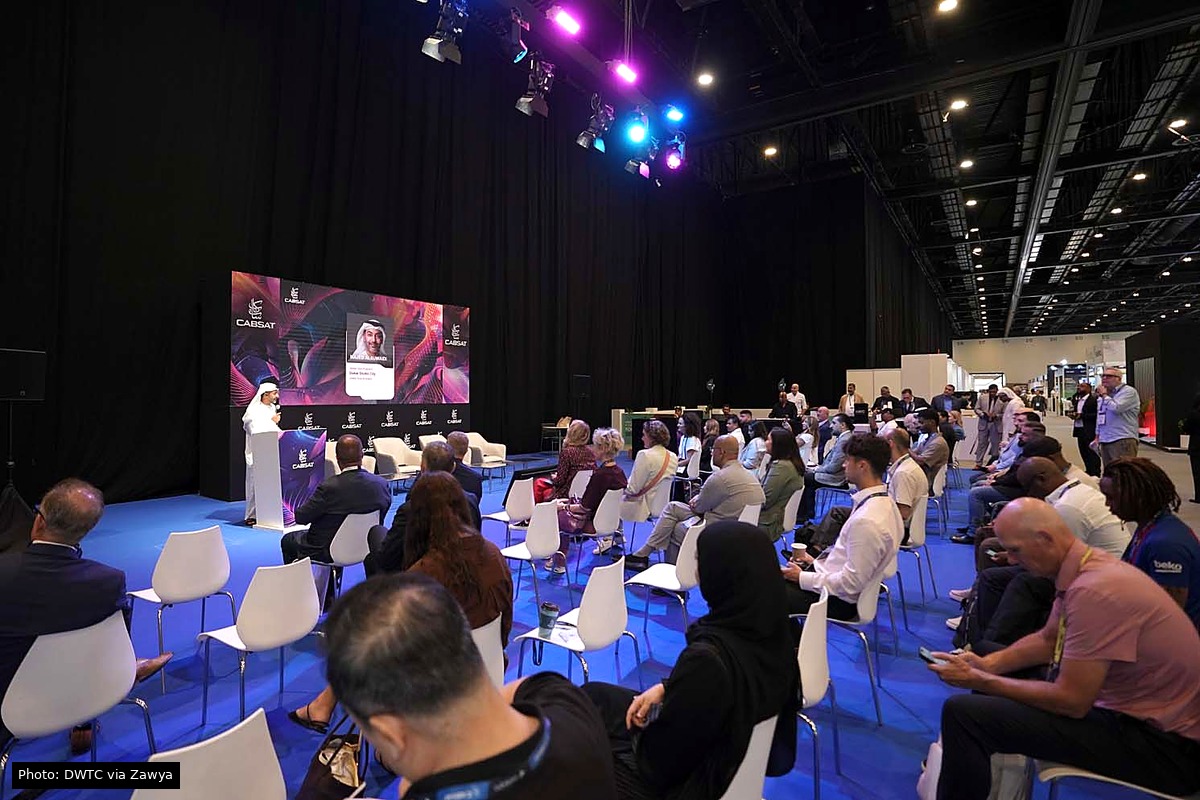
Photo source: Dubai World Trade Centre https://www.zawya.com/en/press-release/events-conferences/buti-saeed-al-ghandi-opens-cabsat-2026-and-satexpo-2026-1510175


Comments