

What MEES 2026 Reveals About the UAE Events Industry: Five Signals Every B2B Brand Needs to Read

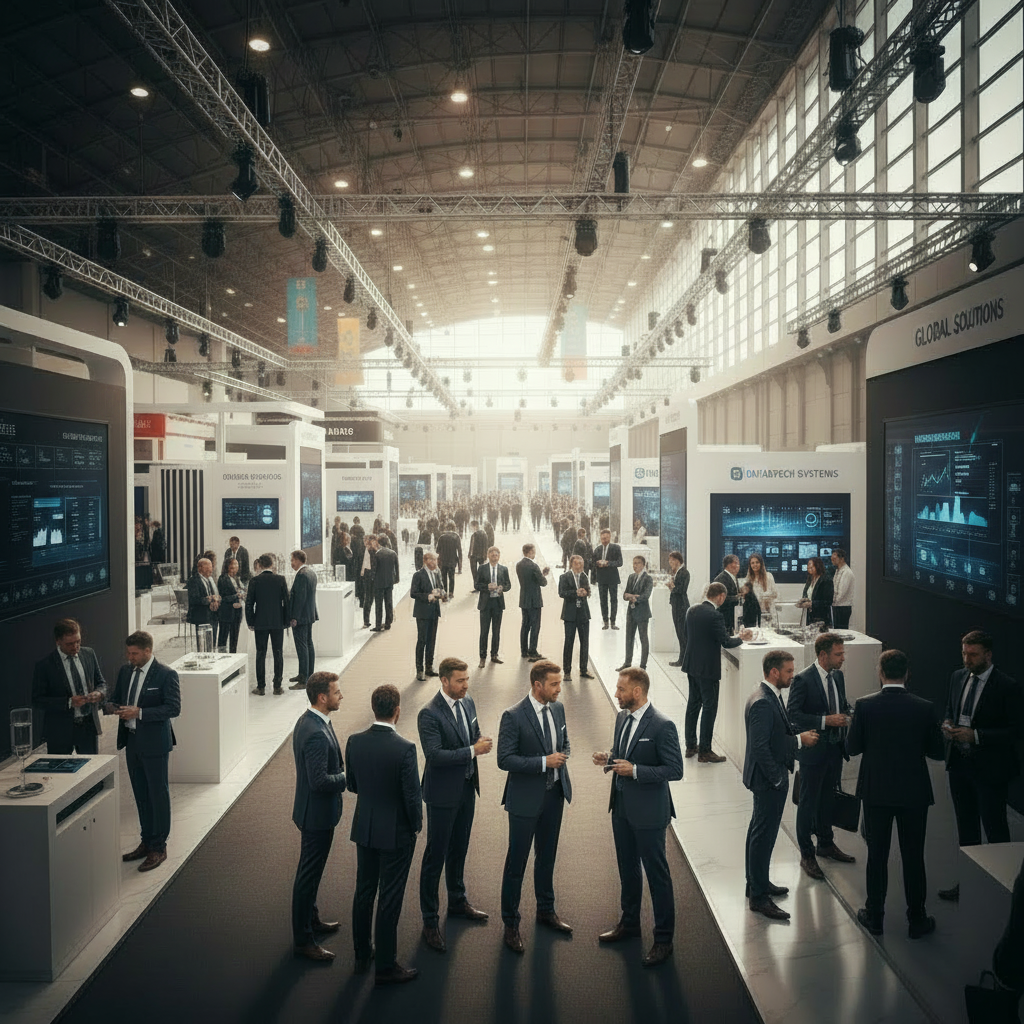
Picture the Sheikh Maktoum Hall at Dubai World Trade Centre on 18 August. Agency founders, venue directors, technology providers, and experiential specialists from across the region are walking the floor of the Middle East Event Show, comparing notes on what is working, what is not, and what comes next in their industry.
The conversations inside MEES 2026 are not just industry chatter. They are a live diagnostic of where the UAE events market stands, what clients are demanding, and which business models are being stress-tested. For any B2B brand that invests in events across MENA, these signals matter as much as your next campaign brief.
MEES returns this week for its 17th edition, bringing together more than 6,000 events professionals at Dubai World Trade Centre on 18 and 19 August 2026, with the Middle East Event Awards following on 20 August at Madinat Jumeirah. The programme is built around the pillars of Reconnect, Rebuild, and Move Forward, which reflects exactly where the industry collective mindset sits heading into H2 2026.
Here are five signals coming out of MEES 2026 that every B2B brand investing in events should read carefully.
Signal 1: AI Is Reshaping Events, But Human Connection Remains the Product
One of the headline sessions at MEES 2026 is titled 'The AI-Proof Industry? Why Events Might Be Technology's Biggest Blind Spot.' The framing is intentional. At a time when AI is automating copywriting, customer service, and content production across every industry, the events sector is asking a harder question: what can technology not replace?
The answer the industry keeps arriving at is human presence. Shared physical experience. The weight of a handshake, the serendipity of an unplanned floor conversation, the collective energy of a room reacting to an idea at the same moment. AI is already changing how events are planned and how post-event sequences run. But the core reason a CEO flies from London to Dubai for a major show rather than watching a livestream remains stubbornly human.
For B2B brands, this lands with a specific implication. If your event presence functions primarily as a content delivery mechanism, a branded backdrop plus a slide deck, you are competing on the wrong dimension. The brands seeing the strongest results at MENA events are designing for conversation, not presentation. They are building reasons to stop, to talk, and to remember.
Signal 2: Resilience Is No Longer Optional, It Is a Business Standard
The session 'Built to Last: Resilience as the Events Industry's New Standard' addresses how event businesses are adapting their operations to withstand pressure in a changing market. The UAE events sector has absorbed significant volatility: shifting client budgets, rising production costs, supply chain complexity, and a faster news cycle that can overturn an event's relevance before it takes place.
Agencies that have grown through this volatility share a common trait: they built operational redundancy before they needed it. For B2B brands working with event agencies or managing their own programmes, this frames a useful set of questions. The conversation with your agency partner should not start and end at the rate card. It should include: what happens if our venue falls through three weeks before the show? How do you manage cost overruns without quality erosion? Resilience is a procurement consideration, not just an operations concern.
Signal 3: Audience Expectations Have Fundamentally Shifted
The session 'Human to Human: What the Industry Is Really Thinking' addresses something every event professional privately knows but rarely states directly: post-pandemic attendees are not the same people they were before 2020. They have spent years in virtual events environments. They know precisely what digital can and cannot deliver. When they show up in person, they want what only in-person provides: depth of connection, spontaneous discovery, and the feeling that showing up was worth the commute.
A branded booth with a leaflet stand and a looping screen is not a brand activation. It is a placeholder. The brands winning at MENA events are investing in curation across the full attendee journey. Azza Hegazi, Head of Global Experiences at Snapchat and a speaker at MEES 2026, leads exactly the kind of experiential work that sets this bar. For more on the event lifecycle, see our guide on the B2B marketing playbook for tech brands in MENA.
Signal 4: The UAE Events Workforce Is Under Structural Pressure
MEES 2026 is dedicating a full session to 'Freelance Under Pressure: The Future of Our Beloved Freelancers.' Freelancers form the operational spine of UAE events delivery. The majority of on-ground execution, from production crew to event managers to experiential designers, runs on a freelance workforce.
That workforce is under pressure. Rising cost of living in Dubai, growing competition from Saudi Arabia and Egypt's rapidly expanding events markets, and the complexity of UAE freelance visa structures are all creating friction. For B2B brands, the practical risk is straightforward: an event agency without a stable, experienced freelance bench is operating close to its ceiling. When demand spikes around major UAE events, that constraint shows up in delivery quality. When briefing an agency, ask about their talent network and how many of their core crew have worked together across multiple projects.
Signal 5: The Industry Is Already Designing for 2030
The most forward-looking session at MEES 2026 is titled 'Event Industry 2030: What Will Disappear?' The session frames a question the industry rarely asks explicitly: which parts of how we work today will be unrecognisable in four years?
The obvious candidates are already feeling dated. Print-heavy floor guides. Passive panel sessions where speakers read prepared remarks. Badge scanning as the primary measure of engagement. What replaces them is less clear, and that is precisely why the industry is having this conversation in public at MEES this week. For B2B brands, the 2030 frame is a useful planning lens. If you are building a long-term events strategy in MENA, you are not just planning for this October. You are deciding what role physical events play in your customer acquisition and retention model across the next five years. That strategic question deserves more than a copy-paste of last year's stand brief.
What This Means for Your Brand
MEES 2026 is not simply a trade show for event professionals. It is a diagnostic of where the UAE events industry stands right now: navigating real change, building new capabilities, and managing client expectations that keep rising. The programme topics reflect the pressures and opportunities that will determine which brands define the next chapter of MENA events.
For B2B brands investing in events in this region, the signal is consistent. The bar for a credible event presence has risen. Audience expectations have risen. The complexity of delivering well has risen. The brands that will extract the most from the UAE events calendar over the next 18 months are those treating events as a strategic discipline, not a recurring line item in the marketing budget.
If you are planning your next activation in Dubai and want to think through what that looks like for your brand, whether for GITEX, ADIPEC, or a custom experience, browse our event services or book a free consultation to start the conversation.
Frequently Asked Questions
What is the Middle East Event Show (MEES)?
The Middle East Event Show is the region's leading B2B exhibition and conference dedicated to the events, MICE, experiential marketing, and live entertainment industries. The 2026 edition takes place on 18 and 19 August at Dubai World Trade Centre, with the Middle East Event Awards on 20 August at Madinat Jumeirah. It is organised by inD, a partnership between Informa Group PLC and DWTC. Full details at the official MEES website.
How does MEES reflect the UAE events industry?
MEES functions as a real-time barometer for the regional events market. Its programme topics reflect what the industry considers most pressing. In 2026: AI integration, operational resilience, evolving audience expectations, workforce pressures, and long-range planning to 2030. The speaker lineup and partner companies attending MEES are the same businesses shaping how major events across the UAE are designed and delivered.
How can SNXS help my brand activate at UAE events?
SNXS works with tech, AI, blockchain, and fintech brands to design and deliver event activations, sponsorship programmes, and brand experiences across the UAE events calendar. From GITEX to bespoke activations in Dubai, we manage the full scope from strategy to on-ground delivery. Visit our services page or book a free consultation to discuss your next activation.
Ready to Build a Stronger Event Presence in MENA?
SkyNet X Solutions designs and delivers event activations for tech, AI, fintech, and Web3 brands across the UAE and broader MENA region. From full-service event production to targeted brand activation strategies, we handle the brief and the build.


Comments