

How Should Space Brands Brief a Pavilion Agency in Dubai?

A space brand should brief a Dubai pavilion agency around the evidence visitors need to inspect, not the scale of the stand. Define the audience, identify the technical claim owner, show which displays are models and which are operational systems, then assign a follow up path for each serious enquiry. The UAE Space Pavilion at the International Astronautical Congress offers a timely example of how a national programme can connect missions, experts and visitors in a shared exhibition environment.
• The Mohammed Bin Rashid Space Centre described its UAE Space Pavilion participation at the International Astronautical Congress in an official October 2026 account.
• The centre says its pavilion displayed Rashid Rover 2 and MBZ SAT, giving visitors specific missions to discuss rather than a generic space theme.
• Its report describes sessions led by astronauts and engineers, a reminder to budget for subject matter experts as well as visual production.
• Dubai event buyers should separate what can be demonstrated in a venue from what needs a later technical briefing.
• A pavilion brief needs one owner for technical claims, one for visitor experience and one for the handoff after the event.
In This Article
1. Start the pavilion brief with the visitor decision
2. Build a Dubai space exhibition around verifiable evidence
3. Compare pavilion agencies against operational criteria
4. What This Means for Your Brand
Start the pavilion brief with the visitor decision
Begin with a decision map. Write down what each visitor should be able to understand before leaving, which claim must be verified, and who can answer the question. The event agency can shape a route through the space, but the organisation that owns the mission must approve the explanation.
This distinction is especially important when a physical model or video is used to describe equipment that is not present in the hall. A visitor should never have to guess whether an object is a flight article, a prototype, a replica or a rendering.
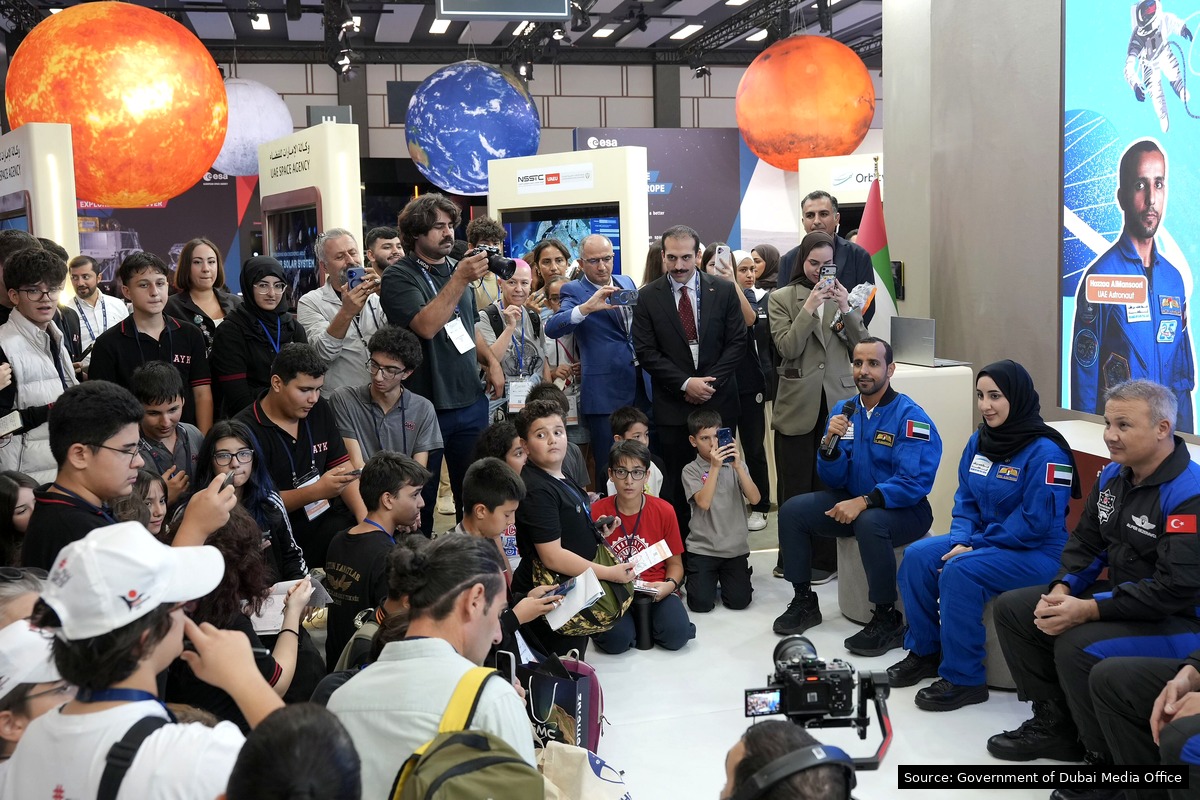
The Mohammed Bin Rashid Space Centre's official account of its participation in the International Astronautical Congress describes displays of Rashid Rover 2 and MBZ SAT at the UAE Space Pavilion. That is a useful editorial example, not evidence that SNXS worked on the pavilion. Named missions give hosts a basis for a conversation about development and research.
The display still needs a clear boundary around the evidence available on the show floor. The next question belongs to the mission team, not to a generic agency script.
Create a claim register before design approval. For each display, the product or programme owner supplies a short description, its current status, approved images, permitted demonstrations and a contact for difficult questions. The editorial owner reviews public wording, while the technical owner reviews accuracy.
Ask the agency to show where each explanation appears in the visitor journey and how staff will correct an outdated panel without disrupting the entire installation. This is more useful than approving an attractive visual concept that cannot be maintained.
Build a Dubai space exhibition around verifiable evidence
The UAE Space Pavilion example shows why exhibit content must be more than a sequence of screens. The centre's official report says visitors explored missions and programmes while astronauts and engineers contributed to sessions. A spoken explanation can expose assumptions that a display alone leaves unresolved.
Plan the sight lines, audio, language support and queue management so visitors can hear the expert, inspect the material and ask a question without blocking the next group. Content is an operational design input, not a file delivered to the production contractor at the end.
A technical exhibition often needs a layered explanation. Give a first time visitor a plain description of the mission and its purpose. Give a specialist a path to current technical material and a qualified contact.
Give an institutional team a way to book a conversation about what the programme can actually offer. These are different layers of the same evidence, not different slogans. Test each layer with someone outside the project before producing panels or rehearsing the host team.
Dubai buyers should ask for the actual venue conditions before signing off an interaction. Power, connectivity, loading, equipment safety, photography permissions and accessible circulation vary by site and hall. Do not borrow an old floor plan just because the event name is familiar.
The Dubai World Trade Centre's official event announcementis a starting point for planning, but the applicable organiser and venue documents must be checked against the booked dates and the proposed equipment. An agency should identify the owner of that check in its scope.
Compare pavilion agencies against operational criteria
A buyer comparing Dubai pavilion agencies should request the same evidence from every bidder. Ask for a sample visitor journey, a technical approval workflow, a staffing plan, and a scope that distinguishes design, fabrication, installation, content, operation and follow up. The cheapest looking render is not comparable to a proposal that includes trained hosts and a controlled editorial process. The decision should be based on what the team will deliver in the room and after it closes.
1. Audience definition. Require named visitor types and a question each group can resolve on site. The agency should identify when a visitor needs to move from a host to a technical owner instead of pushing everyone through the same presentation.
2. Evidence control. Require an approval register for every mission statement, image, performance claim and demonstration. The agency must show how changes are accepted and how expired material is removed before doors open.
3. Physical journey. Ask for an accessible route that works during a busy session as well as in an empty design rendering. Check seating, sound bleed, viewing height, queue location and a quieter place for detailed discussions.
4. Expert schedule. Confirm who can speak for each programme, when they are available and what happens if the expert is delayed. A host can direct a visitor to verified material but must not improvise a technical answer.
5. Measurement. Define a useful outcome for each audience before choosing the scan technology. Count qualified conversations and completed handoffs only when the follow up owner receives the actual question and permission to respond.
6. Delivery boundary. Ask the agency to list what is excluded, including venue fees, approvals, specialist equipment, translations, photography rights and post event reporting where applicable. A comparable budget comes only after all bidders receive the same brief.
The centre's pavilion account is also a reminder to distinguish event documentation from a commissioned case study. A public photograph of a space pavilion illustrates the planning question but does not establish an SNXS role in that programme. Buyers should ask any prospective agency for its own verifiable portfolio, references it is permitted to disclose and a clear explanation of which team members actually delivered comparable work. That is a stronger evaluation method than borrowing authority from a photograph.
What This Means for Your Brand
A space, research or advanced technology brand entering a Dubai exhibition should supply more than a logo pack and a deadline. Bring the mission owner, communications lead, technical approver, visitor programme lead and procurement owner into the same briefing room. Agree which claims can be made now and which require review.
Bring the currently approved visuals and an inventory of models or hardware that can actually travel. That preparation allows an agency to propose an experience grounded in the organisation's real capabilities.
The UAE Space Pavilion photograph accompanying this guide shows UAE Space Agency signage and is an editorial illustration of a real programme described by the Mohammed Bin Rashid Space Centre. It is not an SNXS project photograph and should not be read as an endorsement or partnership. For buyers considering a Dubai event agency, that distinction matters. Ask the agency to provide evidence of its own work, ask the programme owner to validate its own claims, and keep the public story as accurate as the installation itself.
For an agency brief, review SNXS event services, compare a recent exhibition briefing example, then book a consultation with the technical and communications owners present.
FAQ
Q: What should a space brand include in a Dubai pavilion agency brief?
A: Include the visitor groups, the specific question each should resolve, the status of every display and the names of technical claim owners. Add venue dependencies, approved materials, accessibility requirements and the follow up process.
Q: Should a pavilion agency write technical mission claims?
A: The agency can edit explanations for clarity, but the organisation's technical owner must approve claims about a mission or product. Keep a versioned register so hosts and printed materials use the same current wording.
Q: How do you compare two national pavilion proposals fairly?
A: Give both teams the same scope and ask for a visitor journey, evidence approval process, staffing plan and operational fallback. Compare included deliverables and exclusions before comparing any quoted amount.
Q: What if a live exhibit cannot run at the venue?
A: Rehearse an honest offline explanation and give visitors a route to verified material or an expert conversation. Never present prerecorded or simulated content as a live result.
Q: Can an event photograph prove an agency built that pavilion?
A: No. A photograph establishes what is visible at an event, not who planned or produced it. Request an authorised case study and references from the agency before attributing delivery.
Q: How should a pavilion capture useful follow up?
A: Record the visitor's question and consent, assign an appropriate owner, and deliver the promised material. Keep education, media, technical and procurement requests in separate response paths.
Need help turning industry trends into business growth?
Get in touch!
At SNXS, we help startups, enterprises, and government organizations navigate AI, blockchain, Web3, fintech, and digital transformation through strategic consulting, event management, marketing, PR, content, and community building.
Whether you're launching a product, expanding into the MENA region, building your brand, or growing your community, our team is ready to help.
👉 Our Services: https://www.snxs.ae/services
👉 Portfolio: https://www.snxs.ae/portfolio
👉 Store & Digital Products: https://www.snxs.ae/category/all-products
👉 What's Coming Next – MENA AI Week: https://www.menaaiweek.ae/
👉 Business Registration Services: https://www.snxs.ae/business-registration
👉 Request a Quote: https://www.snxs.ae/get-a-quote
👉 Book a Free Consultation: https://www.snxs.ae/book-online
🌐 Visit SNXS: https://www.snxs.ae
Photo source: Government of Dubai Media Office https://www.mediaoffice.ae/en/news/2026/october/11-10/mbrsc-concludes-its-participation-in-the-77th-international-astronautical-congress


Comments