

How Should Cultural Institutions Brief an Agency in Dubai?

A cultural institution hiring an event agency in Dubai should ask for evidence of audience fit, public claim approval, accessible production and a clear handoff after the room closes. A beautiful stage is not enough. The brief must show who owns the cultural content, which stakeholders approve it and what a participant can actually do next.
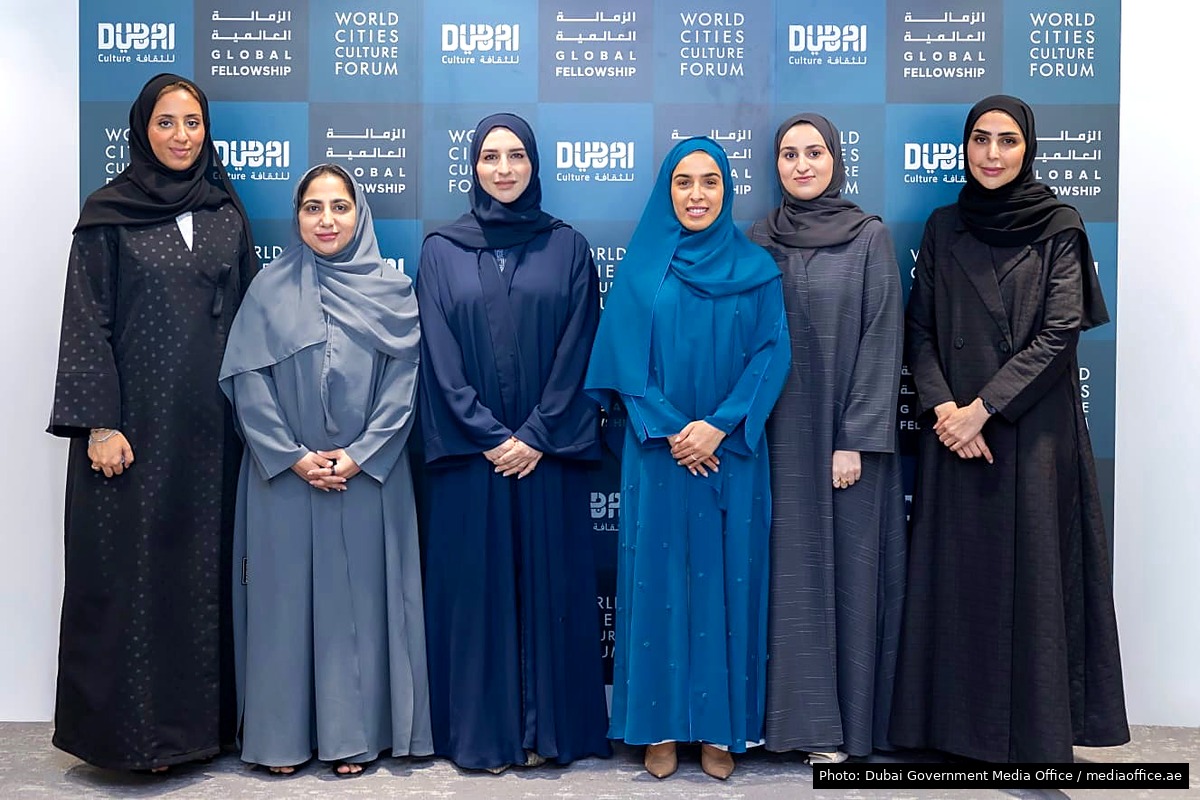
• Dubai Culture and the World Cities Culture Forum announced a Global Fellowship cohort on 6 October 2026, providing a current example of a programme with several institutional owners.
• The official announcement describes 20 mid career cultural policy professionals, including five from Dubai government entities, and a programme spanning online learning, a summit and a Dubai residency.
• The World Cities Culture Forum is visibly identified alongside Dubai Culture on the official 2026 announcement photograph, but that photograph does not identify the event producer.
• MENA Blockchain Week is an SNXS initiative and offers a separate example of why an organiser must define its audience and programme identity clearly.
• A buyer checklist for a Dubai Culture programme should test content authority, participant journey, accessibility, permissions, capture consent and follow up ownership before approving a visual concept.
In This Article
1. Cultural event agency selection starts with accountable content
2. Dubai and MENA cultural programmes need a multi stakeholder brief
3. The buyer checklist tests delivery beyond the stage
4. What This Means for Your Brand
Cultural event agency selection starts with accountable content
A cultural institution does not buy the same thing as a company commissioning an ordinary product reveal. Its event may have a public mission, a civic audience, a city partner and people whose expertise cannot be reduced to talking points. The agency should translate that purpose into a navigable experience without claiming to be the author of the underlying policy, scholarship or cultural work.
The current example is the Global Fellowship announcement by Dubai Culture and the World Cities Culture Forum. The Dubai Government Media Office describes a programme that brings together 20 mid career professionals and combines international learning with a project for each fellow’s city. That is a statement about the official programme, not a claim that SNXS or any other agency produced it. It shows why a briefing document must separate the programme owner, the content expert, the venue team and the production partner.
Begin with the decision you want an invited participant to make. Should a cultural policymaker compare approaches, build a relationship, develop a project proposal or request a separate conversation? A general objective such as visibility cannot determine the format of a working session or the information that a guest needs before arrival. Write a distinct outcome for each audience, including speakers, fellows, public partners and observers.
Next identify the source of truth. When a programme includes several institutions, each may hold a different version of the name, description, imagery and participant permissions. An agency can maintain the approval register, but the institution should name an accountable person for factual claims. Require one approved source packet with the exact public title, participant biographies, image permissions, programme dates and boundaries around quotations.
A relevant SNXS service brief can start with the agency’s events and marketing scope, but a buyer should still ask for evidence tied to the proposed work. The SNXS services page lists the available service areas; this article offers selection criteria rather than claiming that SNXS worked on the pictured fellowship. For a different model of programme ownership, the MENA Blockchain Week site presents an SNXS initiative. The link is context, not proof of participation in Dubai Culture’s programme.
Dubai and MENA cultural programmes need a multi stakeholder brief
An institutional programme can move across cities, venues and formats. The Dubai Government Media Office’s fellowship announcement describes online masterclasses, sessions connected to a Tokyo summit and a residency planned for Dubai. A producer assessing such a programme needs a consistent identity and handoff process without assuming that the same room plan works at every stop. Editorial control should travel with the programme, while local operations are rechecked for each location.
Ask for an audience map before asking for a stage drawing. A senior policymaker may need a private discussion, while a fellow may need a workshop table and documented feedback. A press guest needs an approved spokesperson and accurate context. Distinguish these journeys and identify what each person is permitted to photograph, quote or share.
The Dubai Culture homepage is an official starting point for verifying the institution’s own description and programmes. Its pages should be consulted when public copy makes claims about that organisation. The World Cities Culture Forum’s own site is a separate primary source for its network and programme identity. An agency should reconcile institutional copy against the owners’ latest approved wording rather than treating one partner’s press paragraph as universal approval.
Accessibility belongs in the first production brief. Determine how a guest finds the correct room, whether stage sightlines and sound serve the intended audience, and whether a session’s materials can be shared in an accessible form. Ask for a quiet route for guests who need one and a clear contact for access requests. Treat these as operational questions for the site walk, not last minute embellishments.
The buyer checklist tests delivery beyond the stage
1. Define the audience decision. State what a participant should understand or do when the session ends, then require the agency to map the route to that outcome. A programme that promises meaningful exchange needs more than a branded arrival wall.
2. Identify the claim owner. Record who signs off on every named institution, participant role, statistic and quotation. The official Dubai Culture and World Cities Culture Forum announcement is a suitable source for this specific fellowship, but it does not approve copy for a new event.
3. Separate programme and producer. Ask candidates which work they are actually proposing to deliver and what evidence supports any prior experience. A photograph of a backdrop shows an identifiable programme, not a contract, endorsement or performance result.
4. Test the participant journey. Walk through invitation, arrival, orientation, the working session, networking and departure with people who represent the intended audience. The handoff between these stages should have a named owner and an alternative when a session runs late.
5. Confirm creative permissions. List the logos, photographs, music, artwork and participant portraits that have been licensed or approved for the specified use. An institutional co brand should not become a fabricated sponsorship banner just because two marks appear on the same slide.
6. Rehearse evidence, not just cues. Give presenters the approved facts and a path to correct a public error. If a number is missing from the official source, remove it rather than asking the host to improvise.
7. Define responsible measurement. Decide what constitutes a useful introduction, completed session, requested resource or agreed follow up. Obtain consent before collecting personal details and specify who receives them.
8. Review the aftercare. Require a closeout packet with approved photographs, a record of material changes, outstanding participant questions and agreed owners for follow up. The event ends operationally when commitments are handed to the right teams, not merely when the room is cleared.
What This Means for Your Brand
If your brand works with a museum, authority, foundation or regional programme, the event brief should make institutional trust visible in the details. That means accurate names, approved partner relationships, respectful use of imagery and an experience that serves the guest’s real work. It also means giving the event producer enough authority to manage the room without transferring ownership of the content or public mission.
SNXS works across corporate events and marketing, including specialist programmes where audience design and stakeholder coordination matter. Its services page gives a starting point for a scope conversation. MENA Blockchain Week illustrates a separate SNXS organised programme, not a relationship with the Dubai Culture fellowship shown in the photograph. For the cultural project you are planning, start with the participant decision and the approval map, then request a proposal grounded in those facts.
FAQ
Q: What should a cultural institution ask an event agency before a Dubai programme?
A: Ask who controls factual claims, partner approvals, venue decisions and participant follow up. Request a written audience journey and a sample escalation path before approving a visual concept.
Q: Can an agency use an official event photograph to claim previous work?
A: No. A photograph can show a real programme and its visible backdrop, but it does not prove who produced it. Ask for direct evidence of the agency’s scope before using it as a credential.
Q: How should a Dubai cultural event brief handle several institutional partners?
A: Give each partner an approval owner for its name, imagery and public statements. Maintain one version controlled source packet so the production team is not choosing between conflicting drafts.
Q: What makes a cultural leadership session useful after the event?
A: Agree on the working output, who receives it and what happens next. A participant should leave with a clear route to continue a project or discussion, not only a photograph of the stage.
Q: Should the agency promise a specific attendance or lead figure?
A: No unsupported number belongs in a procurement promise. Define the audience and the evidence of a useful outcome, then set a measurement process appropriate to the actual programme.
Q: How do I evaluate an event agency for a multilingual MENA audience?
A: Ask who reviews the terminology, the speaker material and the onsite wayfinding in each required language. Test a realistic participant journey and the approval process rather than judging translation by a sample slogan alone.
Need help turning industry trends into business growth?
Get in touch!
At SNXS, we help startups, enterprises, and government organizations navigate AI, blockchain, Web3, fintech, and digital transformation through strategic consulting, event management, marketing, PR, content, and community building.
Whether you're launching a product, expanding into the MENA region, building your brand, or growing your community, our team is ready to help.
👉 Our Services: https://www.snxs.ae/services
👉 Portfolio: https://www.snxs.ae/portfolio
👉 Store & Digital Products: https://www.snxs.ae/category/all-products
👉 What's Coming Next – MENA AI Week: https://www.menaaiweek.ae/
👉 Business Registration Services: https://www.snxs.ae/business-registration
👉 Request a Quote: https://www.snxs.ae/get-a-quote
👉 Book a Free Consultation: https://www.snxs.ae/book-online
🌐 Visit SNXS: https://www.snxs.ae
Photo source: Dubai Government Media Office https://mediaoffice.ae/en/news/2026/october/06-10/dubai-culture-and-world-cities-culture-forum-announce-global-fellowship-cohort


Comments