

How Should Teams Stage a Research Launch in Dubai?

A government research launch in Dubai should give each audience a usable piece of evidence, not merely announce a new institution. Define the public problem, show how the research will be used, make the people responsible available for questions, and leave participants with a route to the underlying work. The UAE Model Research Centre launch offers a timely illustration of how a knowledge programme can be translated into a credible event brief.
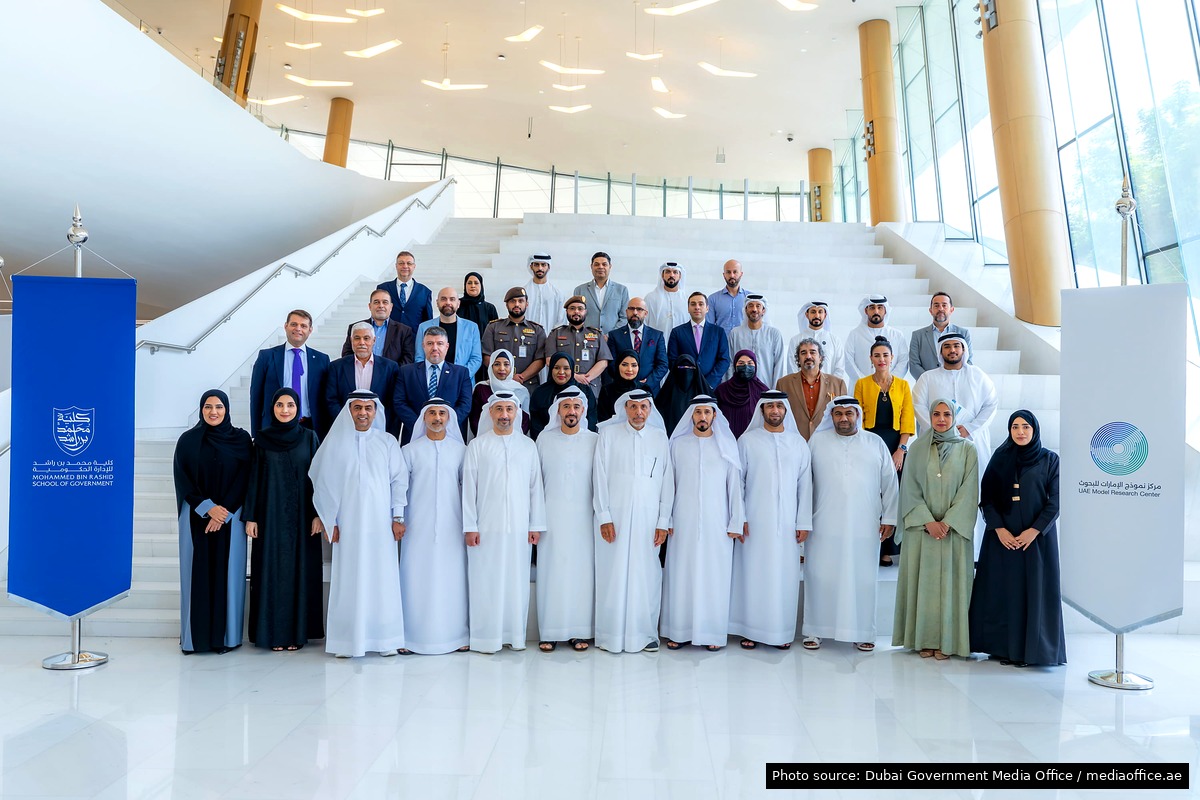
• The Mohammed Bin Rashid School of Government launched the UAE Model Research Centre in Dubai in October 2026.
• The Centre announced a UAE Case Study Platform to document government experiences and extract transferable lessons.
• A policy brief on the Zero Bureaucracy Programme was published alongside the Centre's launch.
• Dubai Chamber of Digital Economy announced the Create AI Agents Championship in October 2026, illustrating another way to frame a practical public challenge.
• MENA Blockchain Week, an SNXS initiative, is a separate example of a named programme whose event format should support a defined professional audience.
In This Article
1. Research Launch Events Need an Evidence Journey
2. Dubai and MENA Buyers Need Clear Institutional Boundaries
3. What This Means for Your Brand
Research Launch Events Need an Evidence Journey
A research centre is not a product launch. A product demonstration can focus attention on a feature; a research launch has to explain what is being studied, how evidence is produced, and who can use the result. A useful brief begins with one public question and then maps the supporting materials a journalist, policymaker, researcher, or prospective partner would need to answer it. A headline can attract attendance, but a credible source document makes the encounter useful after the room empties.
The Dubai Government Media Office's account of the UAE Model Research Centre describes an intended knowledge series, a case study platform, and a policy brief released at the launch. Those are different objects for different readers. A policy team may want the assumptions and method; an executive may want the decision implications; an academic may want a path to the research team.
Presenting all three as equivalent promotional messages would obscure the work. The event plan should route each audience to the appropriate document and expert. Source: https://mediaoffice.ae/en/news/2026/october/07-10/mbrsg-launches-uae-model-research-centre
An event producer can make that route tangible. Place the research question at the opening of the programme, give the relevant author a focused explanation, and reserve a moderated question period for limitations and transferability. The room layout should make it easy for participants to move from presentation to a quieter conversation with a subject specialist. A press desk, accessible document links, and a named follow up contact help prevent a strong stage presentation from becoming an unsupported claim in someone else's recap.
A second official account, the launch of the Create AI Agents Championship by Dubai Chamber of Digital Economy, describes a challenge built around practical problems, testing impact, and developing prototypes. That is a different kind of initiative from a research centre, but it offers a useful contrast for event design. One programme asks visitors to interrogate documented government experience; the other asks participants to build and test a solution.
The agenda, demonstration standard, and handoff should differ accordingly. Neither programme is an SNXS client or partnership claim. Source: https://mediaoffice.ae/en/news/2026/october/07-10/hamdan-bin-mohammed-launches-create-ai-agents-championship
1. Define the evidence owner. Ask which team can verify every public statement and supply the exact publication or policy document before invitations go out.
2. Assign audience paths. Separate the needs of government officials, academics, journalists, and prospective collaborators so each receives an appropriate next action.
3. Design a question period. Protect time for methodological questions, limits, and practical applicability instead of filling the entire agenda with ceremonial remarks.
4. Prepare a document handoff. Give attendees a stable official link, a contact for corrections, and a concise explanation of what is published and what remains planned.
5. Review the photographic claim. Check that the proposed hero image shows the named institution or venue and does not imply a relationship the organiser has not established.
A useful measure is not whether the room was full. Ask whether the audience can identify one documented finding, find its source, and reach the person who can explain it. These checks are operational, not a numerical performance promise. They also make a better brief for production, communications, accessibility, moderation, and post event reporting than an instruction simply to create a high profile launch.
Dubai and MENA Buyers Need Clear Institutional Boundaries
Dubai's institutional events bring together departments, universities, companies, and international visitors with different approval chains. The organiser must distinguish host, content owner, speaker, venue, funder, and invited participant. That distinction belongs in the invitation, stage script, media notes, and social copy. An official photograph can document that people attended a launch without implying that every organisation visible there endorses an outside agency or a later commercial activation.
The UAE Model Research Centre says its work includes documenting government practices and building educational resources. Its policy brief on the Zero Bureaucracy Programme is described by the official source as a research output published at launch. An agency translating that into a buyer brief should identify who owns the research, who approves the explanation, and which document an audience should read. Do not present the Centre's institutional mission as evidence that a particular event format has already delivered an outcome. Source: https://mediaoffice.ae/en/news/2026/october/07-10/mbrsg-launches-uae-model-research-centre
Dubai Business Events provides official planning resources for organisers considering the emirate. A buyer can use that route to clarify destination support while still treating venue selection, production delivery, and editorial approval as separate decisions. SNXS's event services describe the agency's own commercial offer; neither that page nor a public government source should be used to imply that SNXS produced the UAE Model Research Centre launch. Source: https://www.visitdubai.com/en/business-in-dubai/plan-your-event
What This Means for Your Brand
A bank, property group, enterprise technology firm, or public body preparing a research event can use the same discipline. Start with the decision the audience should make after reading the work, then select the format that allows scrutiny. A roundtable may suit a small group comparing implementation barriers.
A public briefing may suit a released policy paper. A working session may suit a prototype that needs user feedback. The form follows the maturity of the evidence, not the status of the guest list.
SNXS can help translate that decision into an event management brief, including audience mapping, production, content handoff, and accountable follow up. The first meeting should establish what material has been approved for public use, who owns corrections, and what participation can be measured without making unsupported outcome claims. Explore SNXS services at https://www.snxs.ae/services and request a scoped discussion at https://www.snxs.ae/get-a-quote. Those links describe what an agency can offer, not an assertion that it worked on any of the public examples discussed here.
A separate SNXS initiative, MENA Blockchain Week, shows why a named programme needs a clear organiser and a coherent audience route. It should not be treated as a government research launch or as evidence of involvement with the Centre. Its official site at https://www.menablockchainweek.ae/ is the appropriate place to inspect that distinct programme. Buyers should use first party programme pages to verify ownership, format, and current information before reusing any case study in a brief.
The recent SNXS guide to government service demonstrations addresses a different buyer decision, how to make a user journey visible at an institutional event. A research launch instead asks how to make a documented finding inspectable. Read that companion guide at https://www.snxs.ae/post/government-ai-service-demonstration-dubai. The distinction matters because the first needs service testing evidence while the second needs research provenance and expert access.
Frequently Asked Questions
Q: What should a government research launch brief contain?
A: It should identify the research owner, the primary publication, the audience segments, the permitted claims, the venue and accessibility needs, and the approved follow up path. Treat visual production and press distribution as supporting work, not substitutes for a source document.
Q: How do we prevent an agency event from implying government endorsement?
A: State each organisation's role in the invitation and event copy, and use only approved names and imagery. A public example can inform an independent planning guide without becoming an agency client claim.
Q: Which format works for a policy research announcement in Dubai?
A: Choose a briefing when a publication is ready for scrutiny, a roundtable when a defined group needs to compare implementation questions, or a workshop when the material is still being tested. Ask the evidence owner to approve the format and the exact public claim.
Q: Should we show a prototype at a research centre launch?
A: Only if a real prototype exists and its limitations can be explained by the team responsible for it. A prototype demonstration and a research finding require different verification and different audience expectations.
Q: How should attendees receive the research after the event?
A: Give them a stable official document link, a named contact, and a clear description of which findings are final. Obtain consent before circulating participant details or connecting people to subsequent meetings.
Q: What should an event agency be asked to prove before appointment?
A: Request a run of show linked to evidence approvals, a named responsibility matrix, accessible audience routes, and a plan for corrections after publication. Check the proposed hero photograph for a visibly identifiable named programme rather than accepting a generic crowd shot.
Need help turning industry trends into business growth?
Get in touch!
At SNXS, we help startups, enterprises, and government organizations navigate AI, blockchain, Web3, fintech, and digital transformation through strategic consulting, event management, marketing, PR, content, and community building.
Whether you're launching a product, expanding into the MENA region, building your brand, or growing your community, our team is ready to help.
👉 Our Services: https://www.snxs.ae/services
👉 Portfolio: https://www.snxs.ae/portfolio
👉 Store & Digital Products: https://www.snxs.ae/category/all-products
👉 What's Coming Next – MENA AI Week: https://www.menaaiweek.ae/
👉 Business Registration Services: https://www.snxs.ae/business-registration
👉 Request a Quote: https://www.snxs.ae/get-a-quote
👉 Book a Free Consultation: https://www.snxs.ae/book-online
🌐 Visit SNXS: https://www.snxs.ae
Photo source: Dubai Government Media Office https://mediaoffice.ae/en/news/2026/october/07-10/mbrsg-launches-uae-model-research-centre


Comments