

What Makes a Brand Activation Convert at MENA Events: Six Decisions That Separate High-ROI Booths from Expensive Wallpaper

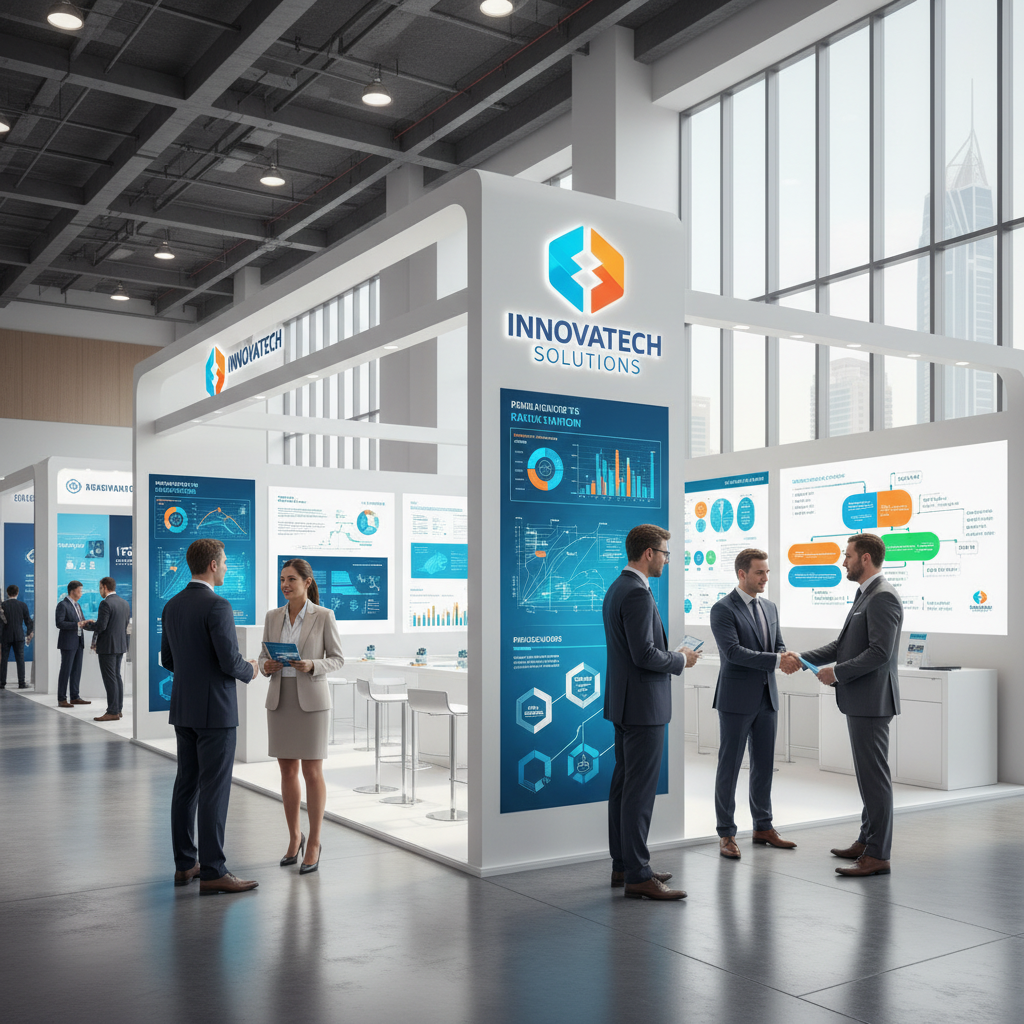
Walk the floor at any major Dubai exhibition and you will find the same pattern: elaborate booths, eye-catching graphics, branded merchandise in towers, and staff who have flown in from three countries. Walk the floor after the event closes and ask those brands what they generated, and the answer is almost always the same: a pile of business cards, two or three promising conversations, and a very large invoice.
The problem is not the budget. It is not the booth design. It is a set of six decisions that most brands make without realising they are making them, and that collectively determine whether an event activation converts or simply costs.
At MEES 2026, which brought together over 6,000 events industry professionals in Dubai this August, one theme ran through almost every keynote: the gap between brands that win at events and brands that just attend has nothing to do with stand size or spend. It has everything to do with the execution framework they bring into the building.
Here are the six decisions that actually matter.
Decision 1: Start Content Distribution Six Weeks Out, Not Six Days
The highest-performing brand activations at Dubai events consistently share one characteristic: they begin content distribution at least six weeks before the event opens. Not six days. Not two weeks after the exhibitor list is announced. Six weeks.
That timeline is not arbitrary. It is the minimum window needed to own a conversation before the venue fills up. When every competing brand activates on the same day the doors open, you are fighting for attention against hundreds of others with identical access to the same audience. When you start six weeks out, you are already part of the conversation before most of your competitors have updated their website banner.
The practical implication: if you are planning for a Q4 Dubai event, that brief needs to land on your agency's desk in September, not October.
Decision 2: Own a Specific Conversation Angle
The second decision is about positioning, and most brands get it wrong by being too broad.
'Leading provider of X in the region' is not a conversation angle. It is a sentence that appears on several hundred booths simultaneously and distinguishes none of them. The activations that generate the highest qualified traffic own a specific, opinionated angle: a problem they are uniquely equipped to solve, a segment they serve better than anyone else, or a point of view that creates genuine intellectual friction with the right buyer.
The goal is not to describe your company. The goal is to attract the specific decision-maker who should be talking to you, and make that conversation feel inevitable before they have reached your stand.
Decision 3: Design for the Digital Afterlife
In 2026, an event activation's reach extends well beyond the venue. Industry practitioners now refer to this as the 'Digital Afterlife' of an event. If attendees are not sharing content from your activation on their own channels, your message stops at the lobby, and every dirham spent on production reaches only the people who were already in the building.
A branded installation that generates genuine curiosity, a live demonstration that surprises, a physical design element people want to photograph: these are not decorative choices. They are media production decisions with measurable reach implications.
The brands with the highest post-event earned visibility treat the activation itself as content production. Every design choice gets evaluated against one question: will someone who was not here today encounter this online tomorrow?
Decision 4: Use Technology to Solve a Problem, Not to Signal Sophistication
Exhibition technology adoption in the UAE has accelerated sharply in 2026, with augmented reality deployments at exhibition stands up 40% across the region. The word to watch in that figure is deployment, not conversion.
Technology at events fails when it signals sophistication rather than solving a specific problem in the buyer journey. AR and immersive tech work when there is something the buyer cannot experience in a trade hall any other way: a product too large to transport, a before-and-after comparison that takes ten minutes to explain in conversation, or a simulation that removes a key objection before it is raised.
Before specifying any technology for an activation, the question is not 'what can we show.' It is 'what does our buyer need to understand, and how does this tool help them understand it faster.'
Decision 5: Build Your Post-Event Sequence Before You Arrive
The most consistent failure point in brand activation is not the event itself. It is the 72 hours after.
Brands that convert at exhibitions have their post-event sequence built and staged before the first day of the show: the segmentation logic, the follow-up email, the LinkedIn connection message, the proposal framework. All of it is ready before the team lands in Dubai.
This matters because every hour of delay after an event is an hour your competitor is already in the inbox. If you have not built a structured post-event follow-up system before the show, you are collecting contacts with no plan to use them.
Every conversation you have on the floor should map to a specific follow-up path that exists in your CRM before you board the plane. That is what separates brands that convert from brands that collect.
Decision 6: Brief Your Agency Eight Weeks Out
The final decision controls every other one. Brands that brief their event agencies eight weeks before the show consistently generate higher ROI than those who start the conversation two weeks out.
Eight weeks is not only about production timelines, though those matter too. It is about the strategic working time needed to develop and test the angle, build the pre-event content programme, align the on-floor experience with the digital strategy, and complete at least one revision cycle before anything goes to print or build.
Two weeks gets you a booth. Eight weeks gets you an activation strategy.
If Q4 is your window, the brief needs to happen now. To build your Q4 activation strategy with a team that understands the MENA events landscape, book a free consultation with SNXS or browse our event services to see how we approach brand activation end to end.
What This Means for Your Q4 Brand Strategy
Q4 2026 is shaping up as the most competitive events season the UAE has seen in recent years. The roster of major shows between September and December will put hundreds of brands on the same floor, competing for the same buyers and the same share of attention.
The brands that win will not necessarily be the ones with the largest stands or the biggest budgets. They will be the ones that made six good decisions and made them early enough to execute properly.
SNXS works with B2B brands across MENA to design and deliver event activations that convert, from brand strategy and pre-event content through to on-floor experience and post-event follow-up. To start planning your Q4 presence, book a free consultation with our team.
Frequently Asked Questions
How far in advance should I brief my event agency for a Dubai exhibition?
The recommended minimum is eight weeks before the event opens. This allows time to develop the strategic angle, build a pre-event content programme, design the on-floor experience, and complete at least one revision cycle. For flagship events or complex multi-day activations, twelve weeks is preferable.
What is the most common reason brand activations at Dubai events fail to convert?
The most consistent failure point is not the event itself but the 72 hours after. Brands that arrive without a staged post-event sequence lose the conversion window to competitors who reach the inbox first. Build the follow-up infrastructure before the show.
How do I measure whether my brand activation is performing?
The clearest leading indicator is what happens online during and after the event. If attendees are not sharing content from your activation on their own channels, your reach stops at the venue doors. Track earned social coverage, the quality of connection requests with event context, and first-response rates on follow-up communications as proxies for on-floor performance.
Work With SNXS
SNXS designs and delivers brand activations for B2B companies across MENA's biggest events. If you are planning a Q4 exhibition presence in Dubai, book a free consultation with our team or browse our services to see how we can help you convert attention into pipeline.


Comments