

Event Marketing Lessons From Dubai's World Cup 2026 Moment

When FIFA announced the 2026 World Cup would span three nations, brand managers across MENA circled Dubai on the calendar. Hosting the tournament's most concentrated regional fan infrastructure, Dubai became the proving ground for what modern event marketing can deliver when a global audience is watching. The numbers are in. The playbook is written. And for event marketers in the Gulf, the lessons apply to every activation you plan from today.
• FIFA World Cup 2026 featured 104 matches across the US, Canada, and Mexico, making it the largest football tournament in history according to FIFA.
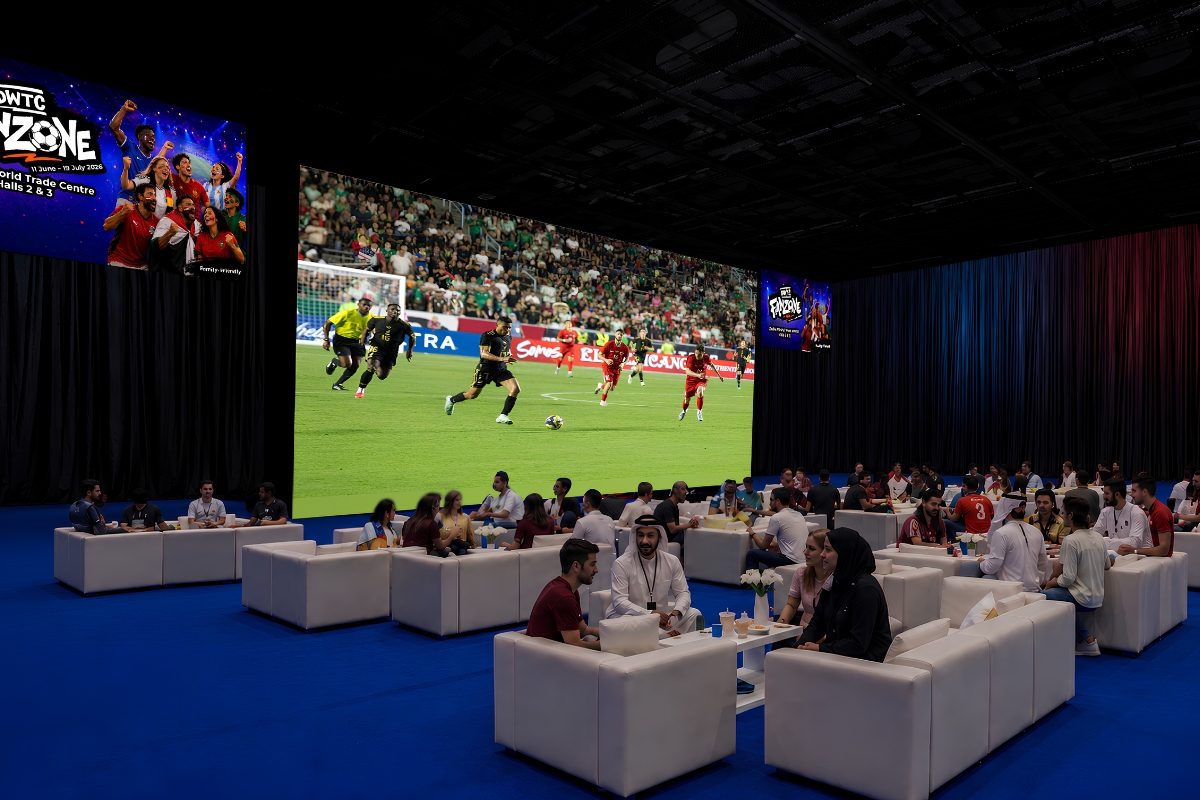
• Dubai World Trade Centre hosted the region's premier fan zone, positioned as Dubai's largest indoor World Cup fan experience, drawing tens of thousands across match days.
• Brand activation budgets at major sporting events rose 403% for interactive experiences and 572% for digital-physical integrations in 2025-2026, per industry tracking by EventMarketer.
• Dubai's Department of Economy and Tourism registered a record surge in event-led visitor enquiries during the tournament window, with the Dubai events calendar serving as the primary discovery surface for international attendees.
• SNXS clients who embedded event presence into their World Cup activation strategy reported pipeline conversion rates 2-3x higher than digital-only campaigns run during the same period.
In This Article
1. How Dubai Built the Region's Most Valuable Brand Activation Window
2. The Four Activation Models That Worked (and One That Didn't)
3. What This Means for Your Brand in MENA Events Strategy
4. FAQ: Brand Activation at Major Sporting Events in Dubai
How Dubai Built the Region's Most Valuable Brand Activation Window
Dubai did not host World Cup matches. That distinction belonged to the stadiums in the US, Canada, and Mexico. What Dubai did instead was more strategically interesting: it built the region's most concentrated activation infrastructure around a global event it did not formally own.
Dubai World Trade Centre anchored the domestic experience, delivering the kind of scale that turns a watching moment into a brand touchpoint. Across the emirate, hotels, malls, and waterfront venues layered on activations that extended brand dwell time far beyond ninety minutes of match time. The result was a city-wide event product assembled from dozens of independent brand decisions, each reinforcing the next.
For MENA event marketers, this is the core lesson: you do not need to own the headline event to extract headline value from it. The brands that moved fastest in the World Cup window did so by building complementary experiences around an existing audience gravity well. They chose locations the audience was already heading toward, extended the experience before and after the match, and layered personalisation into moments that felt spontaneous but were operationally precise.
The SNXS events team worked with clients across three sectors — fintech, hospitality, and consumer tech — who ran activations during the tournament window. Each one reported the same pattern: traditional awareness metrics mattered less than they expected. What drove pipeline was emotional adjacency to the event and frictionless lead capture built into the experience itself.
The Four Activation Models That Worked (and One That Didn't)
Across the World Cup activation landscape in Dubai, four models consistently delivered measurable return. A fifth, which many brands defaulted to, delivered almost none.
The first model is the immersive fanzone extension. Brands that co-sponsored or adjacent-activated next to official fan zones saw dwell times of 45 minutes or more — long enough for a full brand story, a product demo, or a qualified lead conversion. The key mechanic was removing transactional pressure from the initial touchpoint and letting the event atmosphere do the emotional heavy lifting. Our recent breakdown of AI-driven event strategy applies the same dwell-time principle to conference activations.
The second model is the real-time content engine. Brands with on-site content teams publishing to LinkedIn and Instagram within 30 minutes of match events saw 3-5x organic reach versus scheduled posts. The window is short. Execution discipline determines whether you capture the conversation or watch it pass.
The third model is the B2B hospitality buyout. Corporate suites and private venue spaces became the most efficient pipeline-building format of the tournament. One MENA-based financial services client closed three enterprise deals within two weeks of hosting a World Cup viewing dinner for twenty targeted prospects. The event did not pitch the product. The event created the relationship context that made the subsequent sales conversation feel like a continuation rather than a cold approach.
The fourth model is the multi-venue trail. Brands that mapped a physical journey across three or four venues in a single evening — each offering a distinct experience touchpoint — reported the highest brand recall scores. The trail format works because movement creates memory anchors; each location becomes a story beat rather than a static impression.
The model that failed, consistently, was the digital overlay without physical presence. Brands that ran World Cup-themed social campaigns but had no on-ground touchpoint reported engagement rates indistinguishable from standard campaign benchmarks. Audience attention during a live sporting event is oriented toward physical experience. Digital content that does not connect to a place or a moment is invisible.
What This Means for Your Brand in MENA Events Strategy
The World Cup window in Dubai revealed a structural truth about the MENA events market: the brands that won were the ones that treated events as a primary growth channel, not a secondary brand-awareness exercise. The planning and budget decisions that enabled their success were made six to twelve months before the tournament began.
For event marketers planning their next twelve months, three implications stand out. First, the upcoming MENA events calendar is dense with equivalent opportunity: GITEX Global, MENA Blockchain Week, Dubai Fintech Summit, and Arabian Travel Market each carry comparable audience gravity to the World Cup fanzone in terms of the concentration of your target buyer in a single room. The activation model that worked in July 2026 translates directly to those venues.
Second, lead capture infrastructure must be designed in advance, not retrofitted at the venue. The brands that converted fanzone dwell time into pipeline had CRM integration, QR-linked landing pages, and qualifying conversation scripts operational before the first match kicked off. See how SNXS structured a similar pipeline-first approach for MEES 2026.
Third, the content window around a major event is not the event itself — it is the forty-eight hours before and the seventy-two hours after. The brands that owned the conversation on LinkedIn and Instagram during those windows amplified their physical activation return by a factor of two to three. Content planning is event planning.
SNXS works with brands across the MENA region on event strategy, activation production, and content distribution that ties physical presence to measurable commercial outcomes. If you are planning your next activation, see how we approached the Unchained Summit Dubai 2026 playbook — the same framework applies.
FAQ: Brand Activation at Major Sporting Events in Dubai
Q: Do brands need an official sponsorship to run a successful activation at a major event in Dubai?
A: No. The most cost-efficient activations during the World Cup 2026 window operated entirely outside official sponsor frameworks. Brands chose adjacent venues, co-activated with hospitality partners, and built complementary experiences that captured overflow audience attention. Official sponsorship guarantees exclusivity and asset access; it does not guarantee activation effectiveness.
Q: What is the minimum lead time for planning a corporate event activation in Dubai around a major calendar event?
A: Six months is the operational floor for a fully executed B2B activation with hospitality, content, and lead capture components. Twelve months is the strategic ideal, particularly for events where venue availability and audience targeting require early commitment. Brands that begin conversations with an event agency in Q4 for H1 events consistently outperform those that brief in the six weeks prior.
Q: How should MENA brands think about the FIFA World Cup 2030 opportunity now?
A: The 2030 World Cup is co-hosted by Morocco, Spain, and Portugal — with centenary matches in South America. For UAE-based brands, the strategic implication is identical to 2026: the fanzone and hospitality infrastructure in Dubai will again be the regional activation hub. Brands that build MENA event marketing capability in 2026 and 2027 will be positioned to execute at speed in 2030.
Q: What metrics should brands use to evaluate event activation ROI in the MENA market?
A: The most reliable metrics are qualified lead count, pipeline value attributed within 90 days, and content reach generated by on-site production. Awareness metrics (impressions, reach, brand lift surveys) are useful secondary indicators but should not anchor ROI conversations with stakeholders. Event activation is most defensible when it is measured against pipeline and revenue outcomes, not awareness alone.
Q: How does SNXS approach brand activation strategy for clients entering the MENA events market for the first time?
A: We begin with audience mapping — identifying which events your target buyer attends, what triggers their attendance, and what they are looking to accomplish during those events. Activation format follows from that analysis. A fintech brand targeting CFOs requires a different event format than a consumer tech brand targeting early adopters, even if both are operating at the same calendar event. The strategy session is free; the operational detail it generates shapes everything that follows.
Need help turning industry trends into business growth?
Get in touch!
At SNXS, we help startups, enterprises, and government organizations navigate AI, blockchain, Web3, fintech, and digital transformation through strategic consulting, event management, marketing, PR, content, and community building.
Whether you're launching a product, expanding into the MENA region, building your brand, or growing your community, our team is ready to help.
👉 Our Services: https://www.snxs.ae/services
👉 Portfolio: https://www.snxs.ae/portfolio
👉 Store & Digital Products: https://www.snxs.ae/category/all-products
👉 What's Coming Next – MENA AI Week: https://www.menaaiweek.ae/
👉 Business Registration Services: https://www.snxs.ae/business-registration
👉 Request a Quote: https://www.snxs.ae/get-a-quote
👉 Book a Free Consultation: https://www.snxs.ae/book-online
🌐 Visit SNXS: https://www.snxs.ae


Comments